
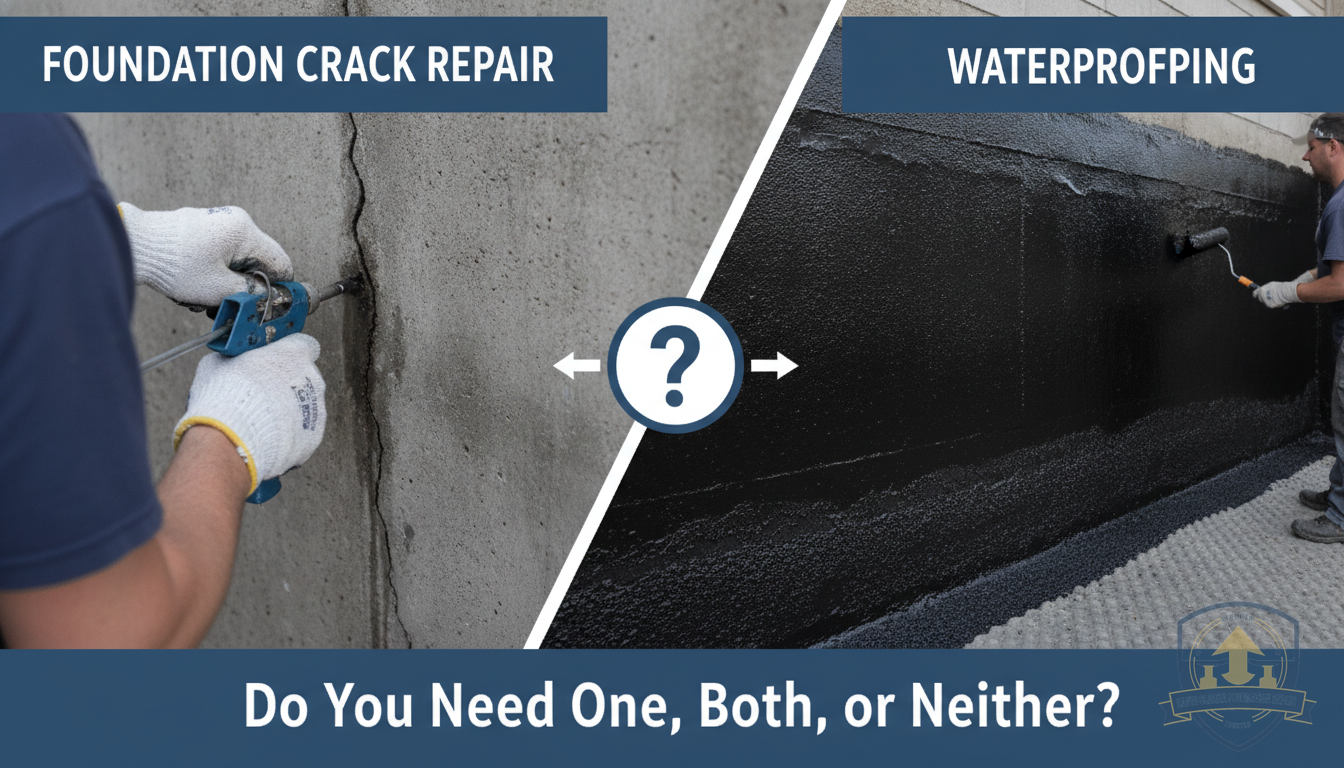
Two Symptoms, One Root Cause
It's a question our team hears often: "I have a crack in my foundation wall and I'm getting some water in after it rains. Do I need crack repair, waterproofing, or both?" The honest answer depends on factors that only a proper inspection can confirm—but understanding the relationship between these two services will help you ask better questions and avoid paying for work you don't need.
In Santa Clarita, the combination of expansive clay soils, seasonal irrigation, and occasional heavy winter rain events means that water and foundation movement often occur together. But treating the symptom you can see without addressing the one you can't is a common and costly mistake. Here's how to think through it.
What Foundation Cracks Actually Tell You
A crack in a foundation wall or slab is a record of stress. The pattern, orientation, and width of a crack each carry specific diagnostic meaning:
- Hairline vertical cracks in poured concrete walls are typically caused by concrete curing and shrinkage. They are usually cosmetic and not structurally significant, though they can allow minor moisture seepage.
- Diagonal cracks running at roughly 45 degrees from corners of openings usually indicate differential settlement—one part of the foundation has moved more than another. These require structural evaluation.
- Horizontal cracks in basement or crawl space walls are the most serious pattern. They indicate lateral pressure from saturated soil pushing against the wall and can signal imminent structural failure if ignored.
- Stair-step cracks in block or brick foundations follow the mortar joints and typically indicate uneven settlement or lateral movement.
- Wide cracks (greater than 1/4 inch) of any orientation are always worth a professional inspection, regardless of pattern.
Our foundation crack repair service begins with this diagnostic process. We photograph, measure, and categorize every crack before recommending a repair method, because applying epoxy injection to an actively moving crack will simply produce a new crack adjacent to the repair.
When Crack Repair Alone Is the Right Answer
If a crack has stabilized—meaning it has not changed in width or length over recent months—and there is no evidence of water intrusion or active soil movement, crack repair on its own is often the appropriate scope of work. Epoxy injection creates a bond stronger than the surrounding concrete and permanently seals a stable crack. Carbon fiber straps can be added across the repaired area to prevent future widening if lateral pressure is a concern.
This scenario is most common in newer homes in communities like Valencia where concrete shrinkage during the original cure left hairline cracks, or in cases where a localized stress event—like a nearby tree removal or a single heavy rain season—caused a one-time crack that has since stopped moving.
When Waterproofing Should Come First
If water is actively entering your foundation—through the crack itself, through the cove joint at the base of the wall, or through porous concrete—sealing the crack from the interior without managing the water source is likely to fail. Hydrostatic pressure will simply push the water through the path of least resistance, which after crack repair may mean a new location rather than the one you just fixed.
Our foundation waterproofing service addresses the water management problem through interior drainage channels, sump pump installation, and exterior membrane application where excavation is feasible. For many homes in Saugus and Canyon Country where hillside grading directs runoff toward the structure, correcting the exterior drainage conditions is the single highest-value intervention.
Signs that waterproofing should be your first priority include:
- Visible water seeping through cracks or at the base of foundation walls during or after rain events
- Efflorescence (white mineral deposits) on interior concrete or block walls, indicating repeated moisture cycles
- Musty odors or visible mold in a basement, crawl space, or utility room adjacent to the foundation
- Standing water in the crawl space after irrigation or rain
- Rust stains on the concrete indicating corroding rebar inside the wall
When You Need Both—and in What Order
The most complete and durable outcome for most Santa Clarita homeowners with both active cracking and moisture intrusion involves combining both services, applied in the correct sequence. Waterproofing—particularly exterior membrane application or interior drainage installation—should come first, because it eliminates the hydrostatic pressure that may be causing or worsening the cracking. Once the water management system is in place and the crack is no longer experiencing hydraulic force, crack repair can then create a permanent structural seal.
This combined approach is particularly relevant for homes in Newhall, where older concrete foundations may have both historical cracking and outdated drainage that was never designed to handle modern irrigation volumes. It is also a common scope for properties in Stevenson Ranch where hillside lots concentrate drainage against upslope foundation walls.
For homes with pier and beam construction, the parallel concern is moisture in the crawl space rather than water through foundation walls. In those cases, crawl space encapsulation plays the role that waterproofing membranes play for slab and basement foundations—controlling the moisture environment so that structural repairs to beams and piers can last.
Cost Considerations: Getting the Scope Right the First Time
One of the most expensive mistakes a homeowner can make is addressing symptoms in the wrong order and then having to redo work. Sealing a crack while ignoring active water pressure will require reopening the repair. Waterproofing a crawl space without replacing rotted beams first means your new vapor barrier will sit beneath a compromised structure. Investing in a thorough diagnostic inspection before any repair work begins pays for itself by ensuring the scope of work is complete and correctly sequenced.
Santa Clarita Foundation Repair provides assessments that evaluate both structural and moisture conditions together, so our repair recommendations address root causes rather than just the most visible symptom. This approach protects your investment and reduces the likelihood of needing follow-up repairs within a few years.
Get a Clear Diagnosis Before Committing to Any Repair
If you are uncertain whether your situation calls for crack repair, waterproofing, or a combination of both, the right next step is an on-site evaluation. Our team serves all Santa Clarita Valley communities including Valencia, Newhall, Saugus, Canyon Country, Castaic, and